
Solution
Ornamental fountains
Rome introduced fountains as decorative elements of the city.
Introduction
Ornamental fountains are the daughters of those fountains. Until the nineteenth century the water had to rise higher than the piece: spring, reservoir, aqueduct. With electricity, pumps and electromechanical systems, the fountain no longer depends on the drop in level and opens to architectural freedom: higher jets, large waterfalls, tanks with changes of form, textures and colours in contrast. In the twentieth century the water begins to circulate on the site itself.
They became elements of architecture. When plumbing enters the house, the civic fountain ceases to be the place to fetch water and becomes a piece of the square. They bring water, the nuclear element of nature and of life, into urban environments and into commercial and workplace buildings. The sound of water, once heard only in the midst of nature, enters the environment made by man, with the sensation of coolness.
What sets them apart
The aesthetic is a play of jets and falls: they simulate a spring, represent the force of water, exalt a sculptural element. There is the jet in the air, the blade that overflows, the sculpture that floats. In these fountains, automation is nil or reduced. Art is made with stories, narratives and messages. What is seen and heard is born of the jets, the textures and the finishes.
In twentieth-century urban planning they became pivotal pieces. They decorate the city in the visual, the auditory, the tactile and the mental. They contribute to the well-being of populations. People sit beside them, contemplate the sound of water, read a book, let the children play and feel.
With submersible lighting, they reinforce public light and night-time comfort. Where there is a fountain, there is quality of life. They are synonymous with development.
Where they belong
- SquareAn everyday presence, at the scale of those who cross, sit and contemplate.
- BuildingWater in the commercial or workplace environment, where the site is synthetic.
- HotelWater at the entrance or in the courtyard, without competing with the building.
- GardenThe same vocabulary, at the scale of the private grounds.
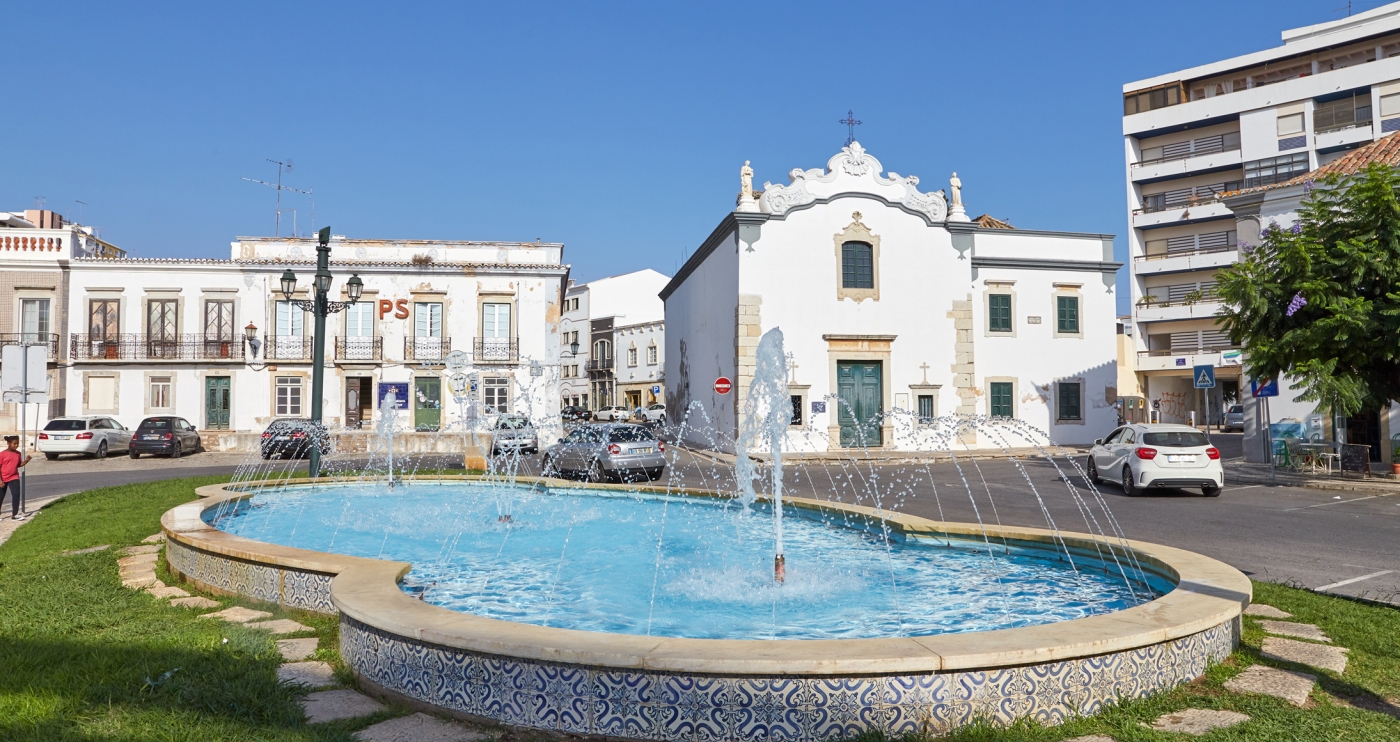
Example of this typeLargo do Pé da CruzFaro